

Therefore, they attached micro-electrodes to a group of nerve cells located in the cat's visual cortex.
With the micro-electrodes they could measure current, which is used to communicate between nerve cells. Even though the cat is anesthetized, its eyes are still hit by photons (light), and the entire “apparatus” used in the brain to interpret visual impressions is still functioning.

Figure 1. Anesthetized cat with a microelectrode in the visual cortex
Hubel and Wiesel describe how they try to show the cat all sorts of different things on an old-fashioned overhead projector, but the electrode remains silent.
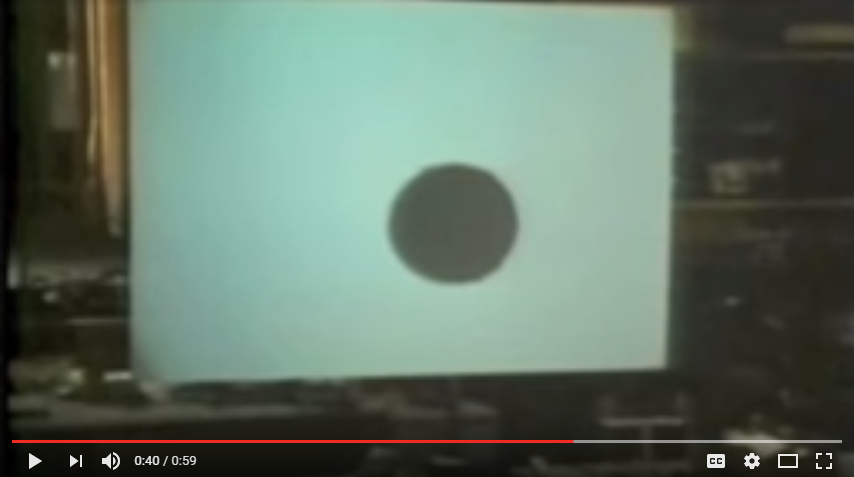
Figure 2. Image that the researchers showed to the cat, without reaction.
It is only when they accidentally move the edge of the sheet onto the edge of the overhead projector, in a way that accidentally creates a slanted line, that there is a gain. They find that the place where they have placed the micro-electrode is the place in the cat's brain that it uses to identify lines of about 30 degrees. That is, that this group of nerve cells responds to a line (at a certain angle, and in a certain place) - and nothing else . Also note that the signals are fired several times in quick succession as long as the line is displayed, and sometimes there is longer in between when the line may not be completely displayed in the "ideal state".
You can watch the video here: https://www.youtube.com/watch?v=IOHayh06LJ4
Also, watch this video: https://www.youtube.com/watch?v=8VdFf3egwfg if you want to see more about this quite fascinating experiment.
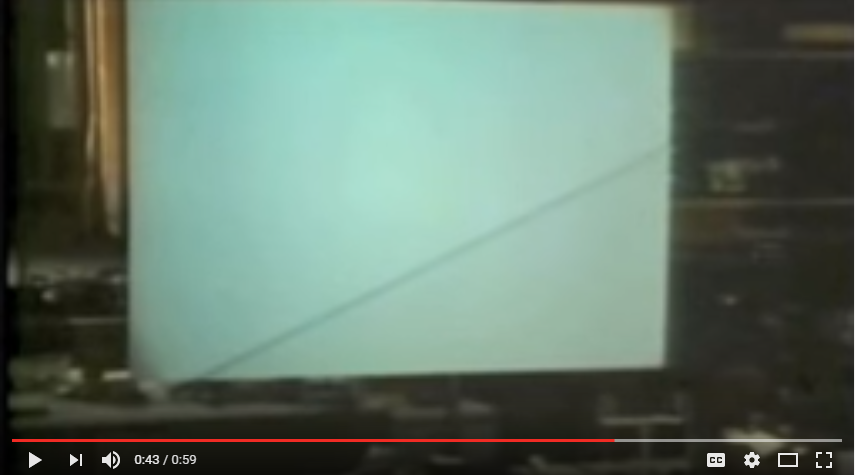
Figure 3. The edge of the overhead on which the image was displayed. The ANGLE of the line/edge triggered a reaction.
One of the things we can learn from the experiment is that a specific area in the cortex, consisting of a number of nerve cells, responds to very specific input and is therefore not fired by everything. No, the nerve cells in the experiment are answering a very specific question: Is it a line of about 30 degrees or not? Other nearby nerve cells may be fired at other angles, but this group of nerve cells fires at a high rate at an angle of about 30 degrees.
Nerve cells that are next to each other fire at other angles (e.g. 25 degrees) and therefore fire only to a lesser extent when they “see” an angle of 30 degrees, and nerve cells that are far away “say” nothing at all. In this way, the nerve cells in the brain can “cast their vote” on different questions.
It is important to understand that activity in an area of the brain has a specific meaning, just as lack of activity in an area also has a specific meaning. (That is, “I am NOT looking at an angle that is 30 degrees”).
Also remember that the signal to the group being measured in the experiment comes from synapses from other nerve cells, so it is a signal that has been processed before it reaches this group of nerve cells.
Do you want to? learn more?
If you want to know more about digital learning and e-learning, you can start with our E-learning FAQ
If you are interested in the brain and learning, you will probably like these articles.
- The brain and learning
- What happens in the brain when we learn?
- Brain function explained with Facebook
- Neuro for nerds: nerve cells, axons, dendrites and synapses
- Grandma neurons, Jennifer Aniston and Catwoman
- This is your brain on Tetris
- The mental shotgun
- Bias in assessing one's own learning
If you are interested in reading more about motivation and learning, these articles may interest you.
- Self-determination theory. The most important theory you need to know about learning.
- Coercive design – how not to design e-learning .
- Which learning methods best support motivation for learning?
- Your brain is NOT a computer - Predictive Coding
- Flick 2 learn. Why Interactive e-learning is NOT always exciting e-learning